Bring location intelligence to your environment.
Add it to your own site or start from our templates. Extend it into delivering tasks to your workforce, tracking your assets, crowd-sourcing updates, and automating your forms. Everything you run lands on the same map, scoped to who should see it.
Two ways in
Add it to your site, or start from ours.
The same platform either way. The difference is only where the pages live.
Your own site
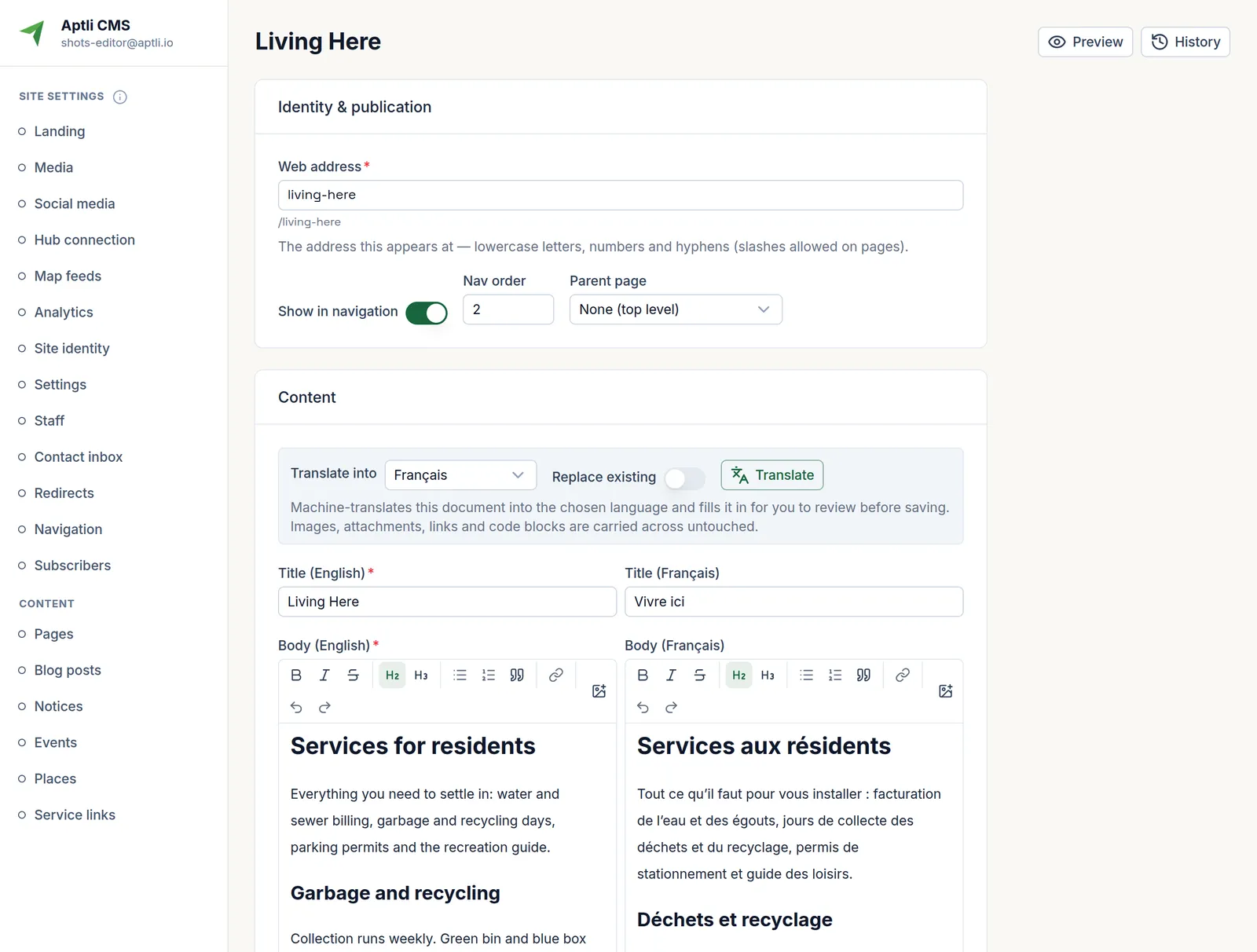
A plugin for your CMS, or an embed for anything else. The map, the forms and the intake render inside your existing pages, under your own domain, and the systems you already run stay authoritative.
Our templates
Start from a template and get the whole public site with the map, forms and intake already in it. Existing pages, documents and friendly URLs migrate across with redirects, so nothing loses its address.
What you extend it into
Once location is in, the work that follows is already connected.
Four things that run on the same records, on the same map.
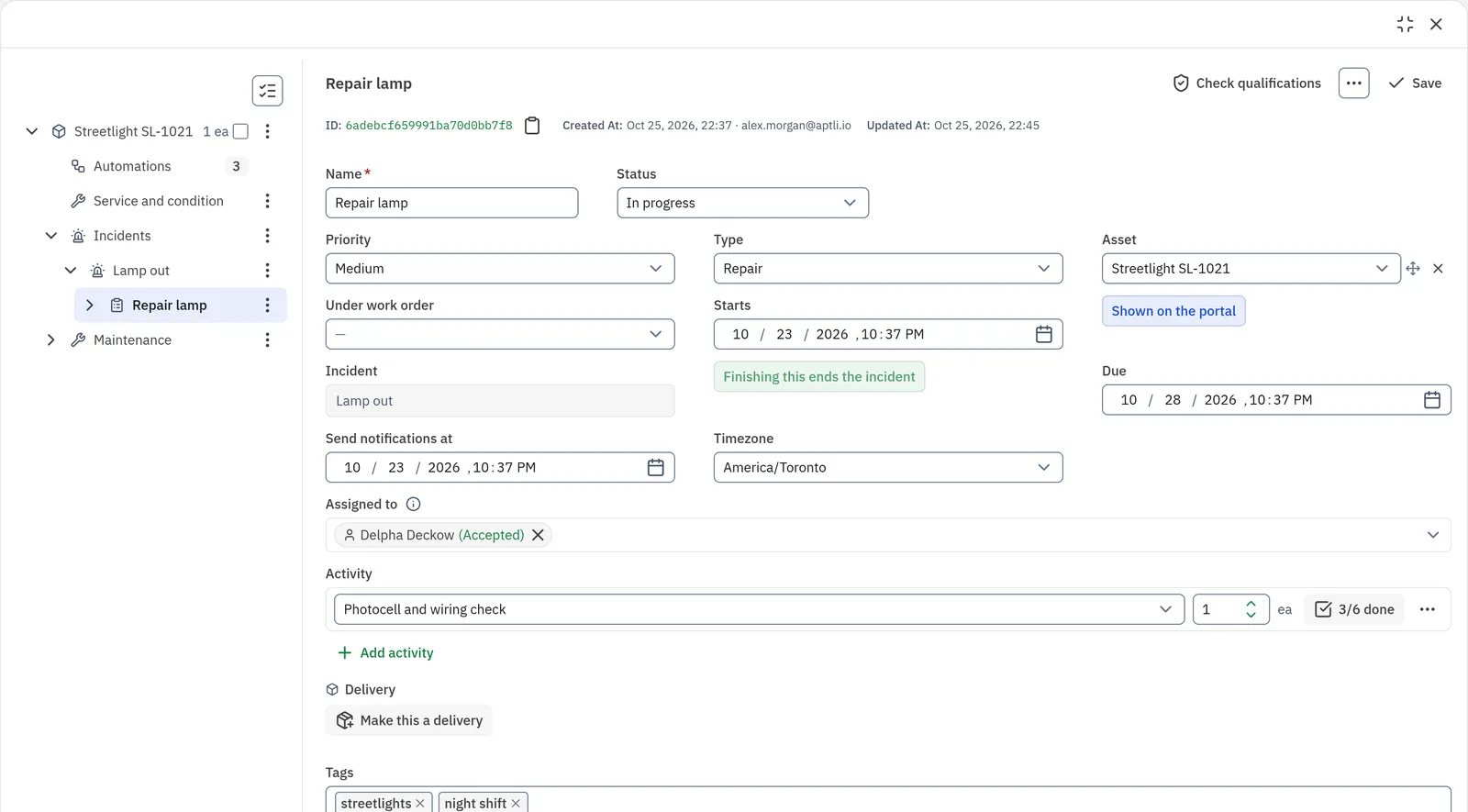
Delivering tasks to your workforce
Plan work, dispatch it, and track it through to close. Someone in the field can file a completion report by replying to an email or a text message, with no login and nothing to install.
Tracking your assets
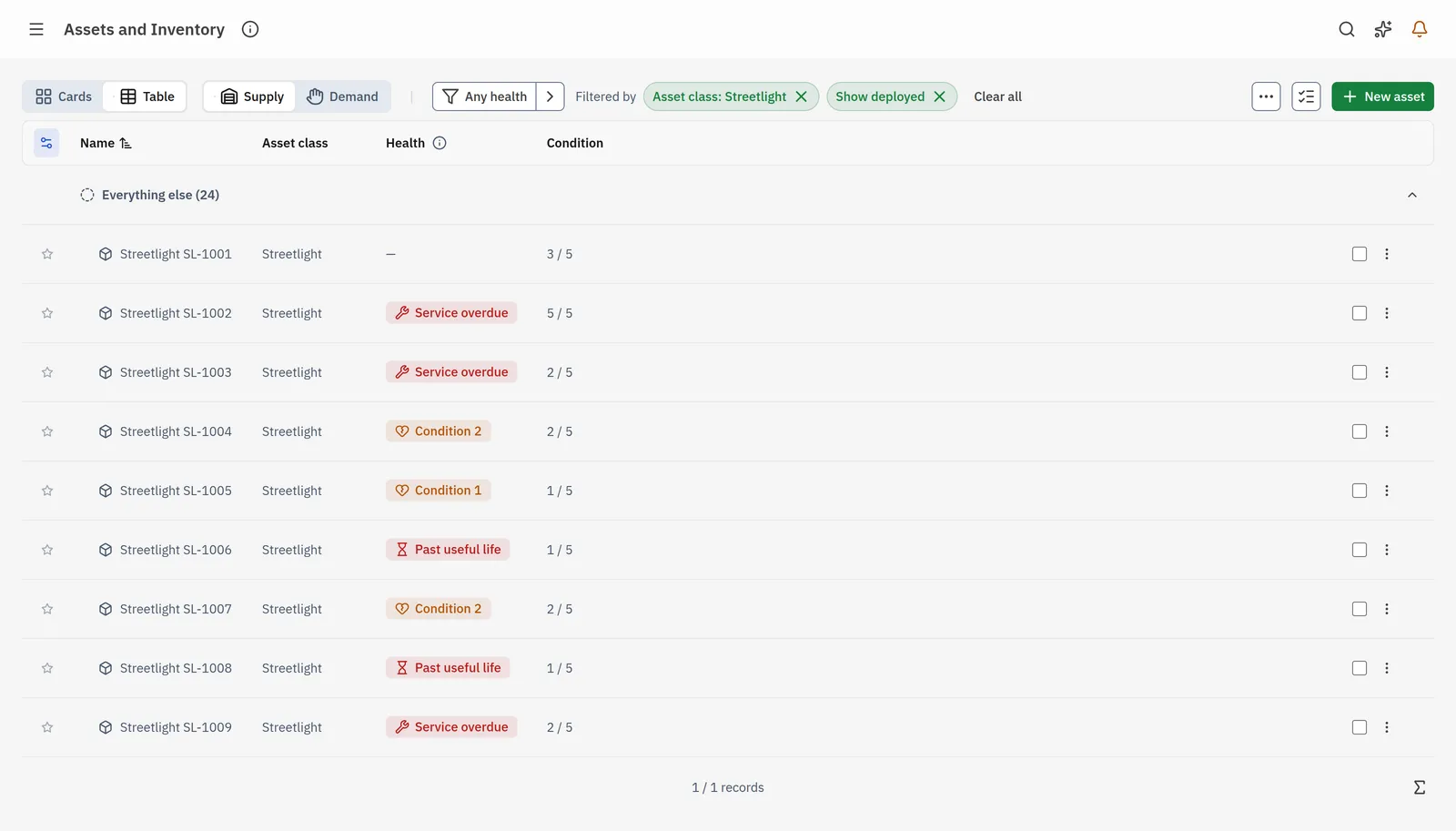
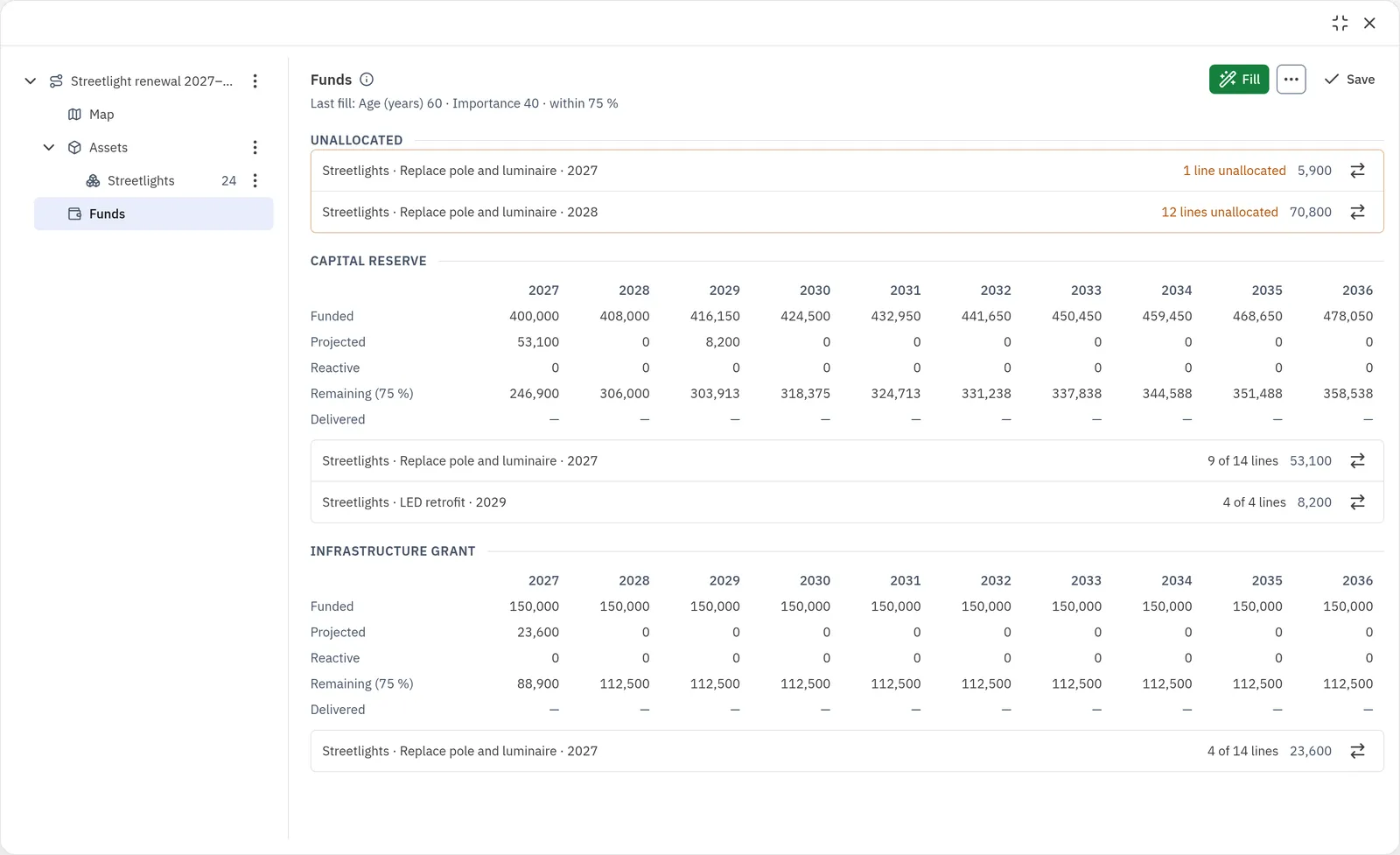
Each asset carries its category, condition, install date, replacement cost, useful life and criticality, on the map where it sits. Condition is recorded with the method behind it, from a visual check to a CCTV inspection, so a rating can be defended later.
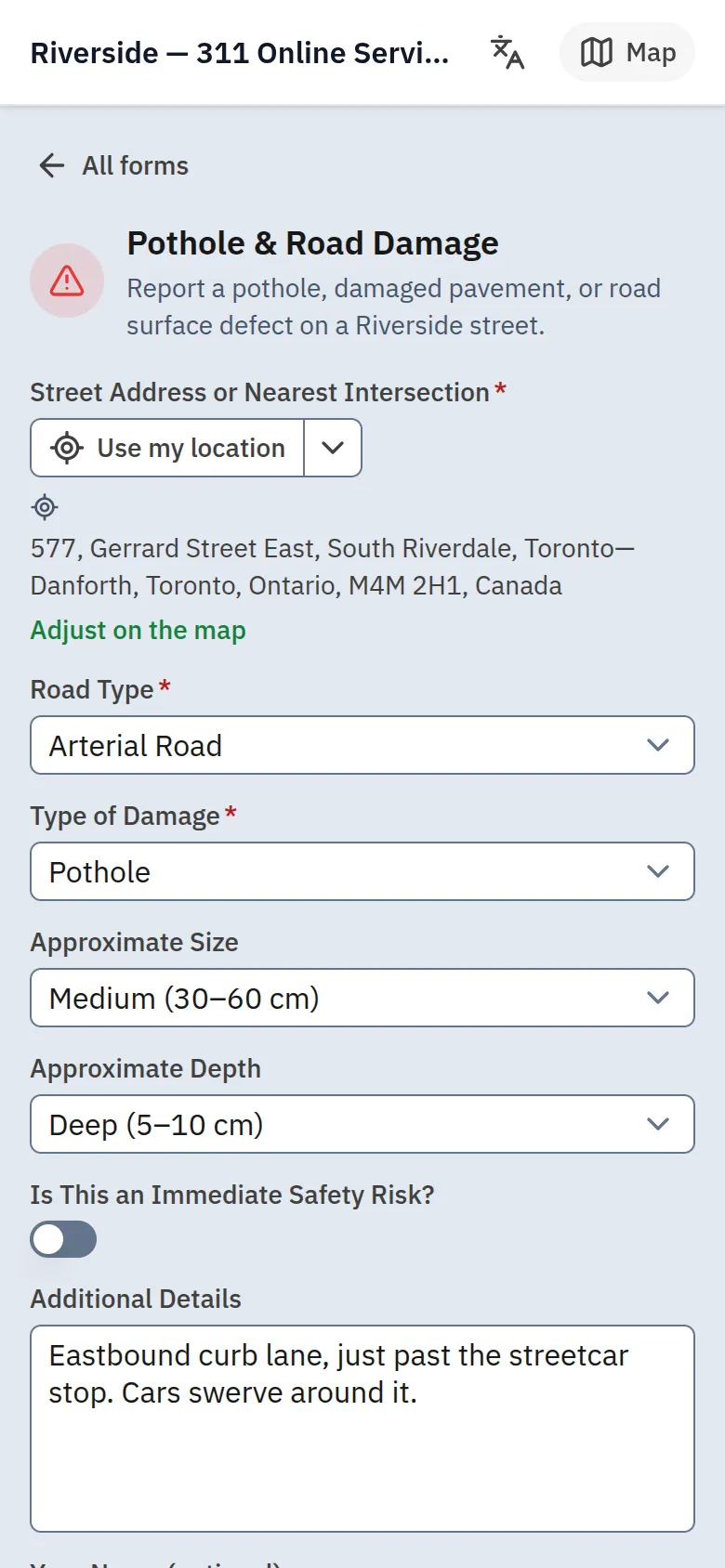
Crowd-sourcing updates
A public reporting page at its own URL, with no account required. Someone describes or photographs a problem, the right form is selected for them, and they can recover their reference number by email afterwards.
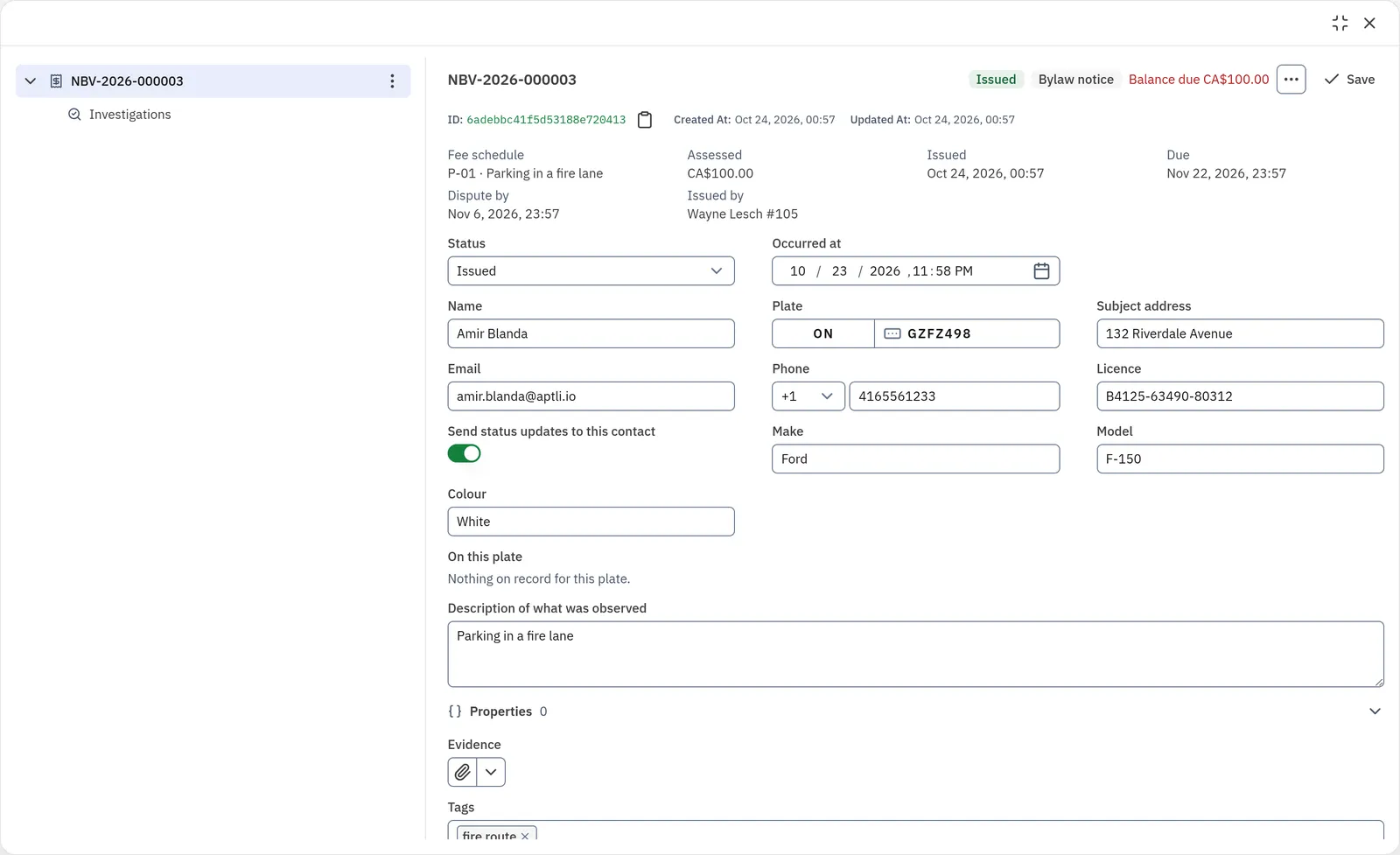
Automating your forms
Build a form once, with conditional fields, required rules and pattern checks. Fields can capture geometry directly, so a submission arrives already placed on the map instead of needing to be located by hand.
Worth verifying
Four things to check in a live demo.
Each one is demonstrable on a running instance.
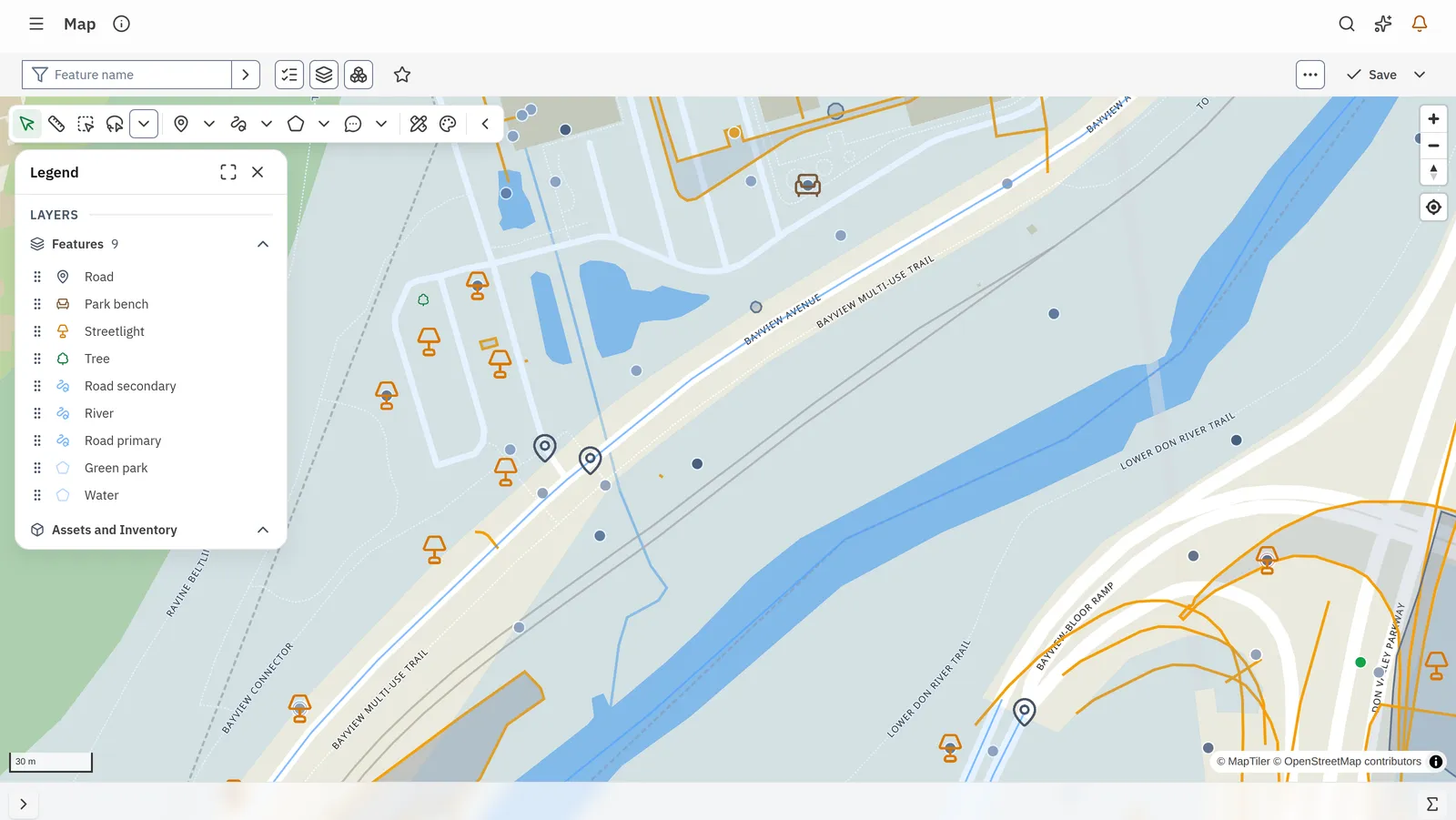
The map is the data model.
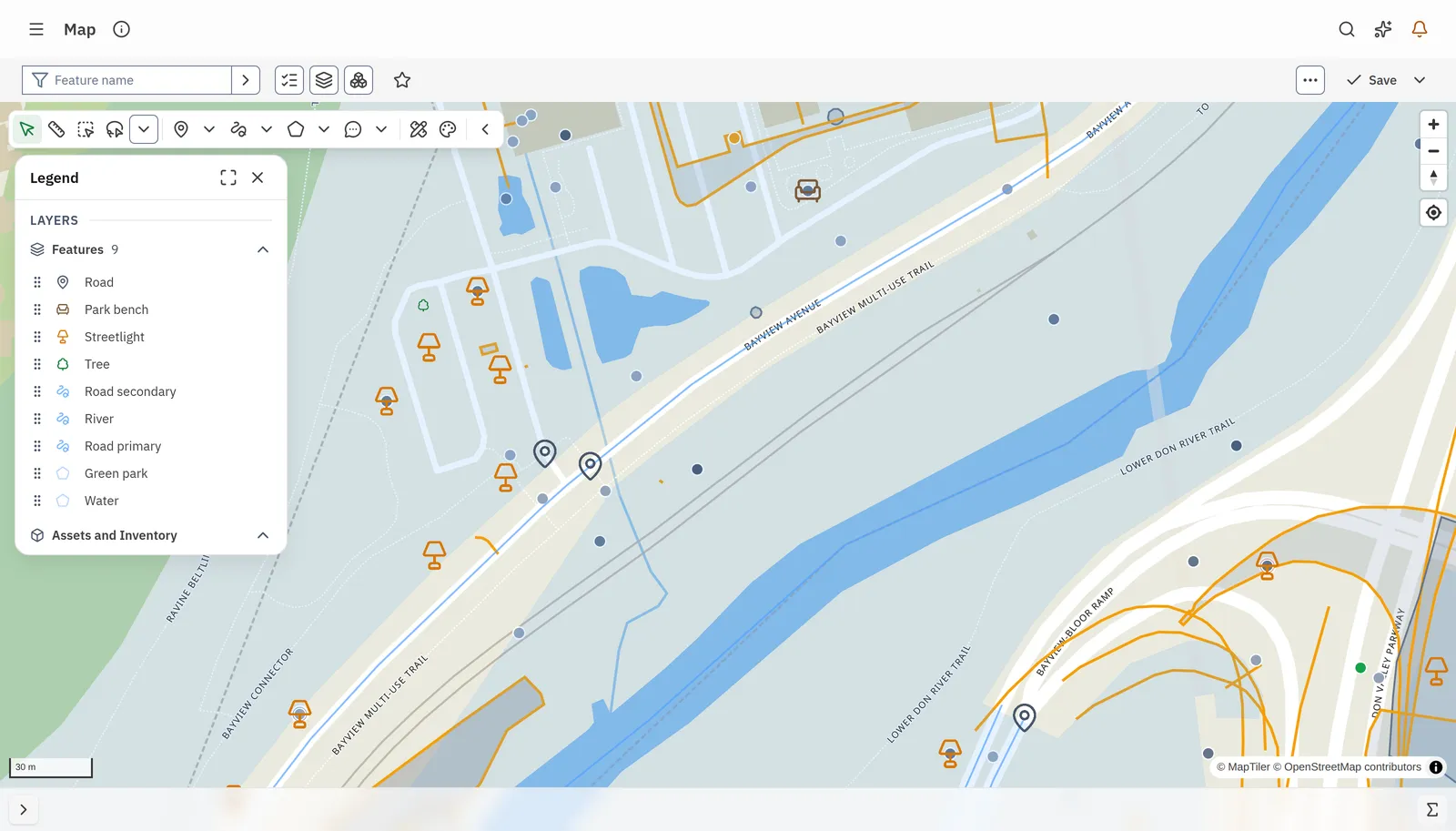
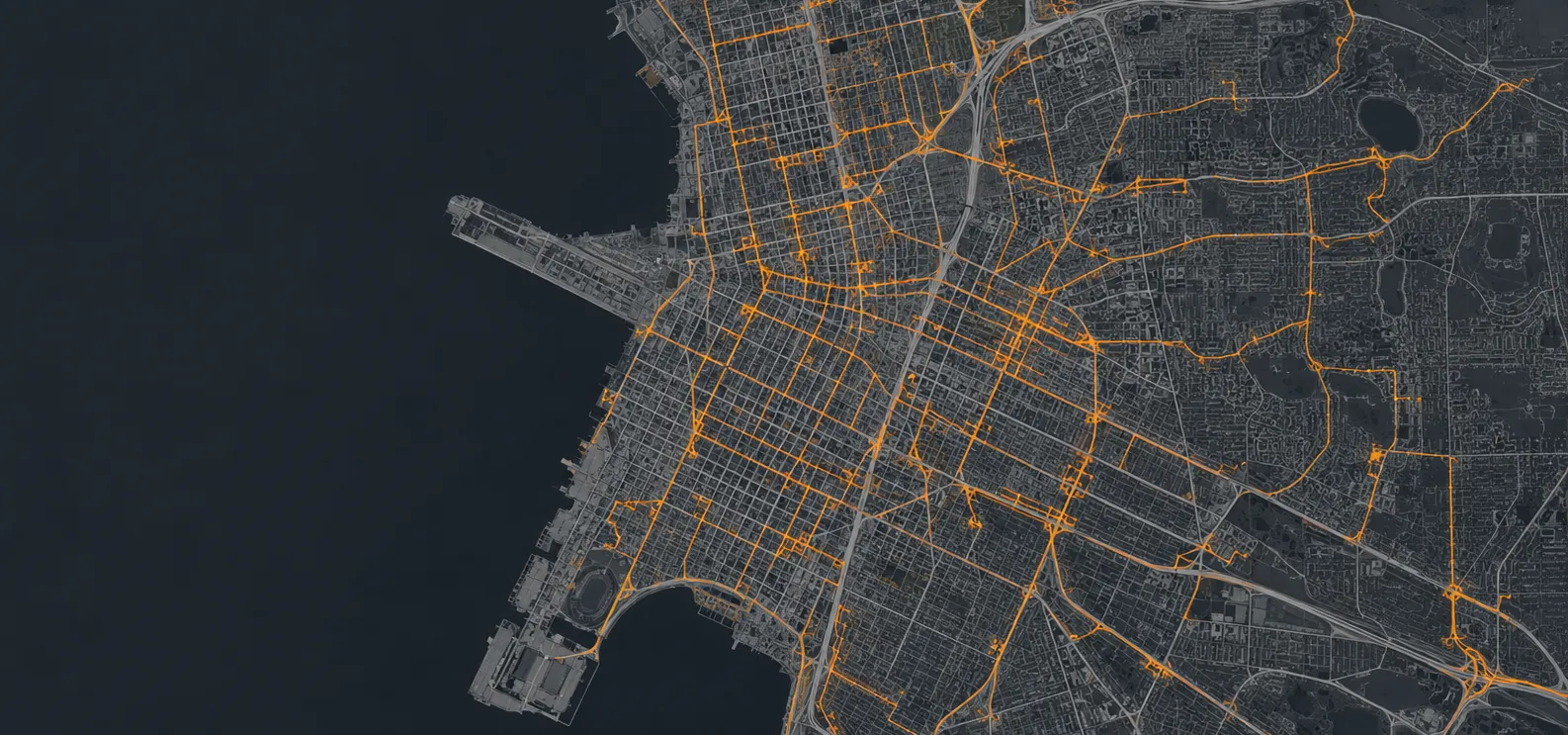
Every asset, report, and work order is a geospatial object. The map draws hundreds of thousands of features in a browser at full fidelity, with no clustering and no summary dots.
Catch the clash before the crew does.
When teams, departments, and areas overlap, work collides. Silent duplicates surface later as expensive rework. Aptli puts those clashes on the map before anyone mobilizes.
Records that update themselves.
When work is marked complete, the asset record changes with it. No manual reconciliation at month end. The data reflects reality the instant the job is done.
A record nobody can edit their way out of.
Independent validations, full change history, access control enforced at the server. Proof of what was done, by whom, when, and whether it passed.

For Operations & Maintenance
Know what's due, what's late, and where it is, without a spreadsheet in the middle.
Maintenance usually lives across a work-order system, an asset register, and a map that don't agree with each other. The gap between them is where preventative work quietly turns into emergency work.
- Every asset carries its own maintenance history, on the map where it sits.
- Preventative schedules fire on a calendar or on a sensor reading, and open the work order themselves.
- Status updates the moment it changes in the field, not at the end of the week.

For GIS & Engineering
Stop chasing data errors. Start trusting the map.
Asset data arrives from multiple sources and formats, GIS exports, spreadsheets, CAD, and legacy systems, bringing duplicates, overlaps, and conflicting definitions that only surface later as expensive field rework.
- Import shapefiles, geodatabases, GeoJSON, KML, CAD, CSV and Excel through one server-side pipeline.
- The conflict gets caught before the crew does. Overlaps become map markers you resolve at your desk.
- One definition, enforced. Every layer carries a formal standard tied to its content.

For the Field
Submit your work your way, a text, an email, a photo, or your voice.
The gap between finishing a job and closing it out is paperwork. Forms to fill, photos to attach, records to submit. Every error means a delay.
- Say it; don't type it. Speak your completion report and Aptli drafts the record.
- The photo proves the work, not just the visit. It feeds directly into the report.
- Works with the signal off. Capture in the field, and it syncs when you're back in range.

Public web presence
The website and the service hub, on one platform.
For municipalities and public organizations, Aptli extends to the public site itself: a content system your staff run, with the map, the forms, and the resident reporting built into it rather than bolted on as plugins.
- Staff log in, edit, and publish live, no redeploy, no release cycle, no vendor update to absorb.
- Every existing page, document, and friendly URL migrated across intact, so nothing loses its address.
- WCAG 2.2 AA engineered into the build, with mirrored languages published as real indexable pages that assistive technology reads in its declared language.
Who it's for
Built for organizations that manage physical things across a geography
One platform, tuned to how your sector actually runs.
Municipal & public sector
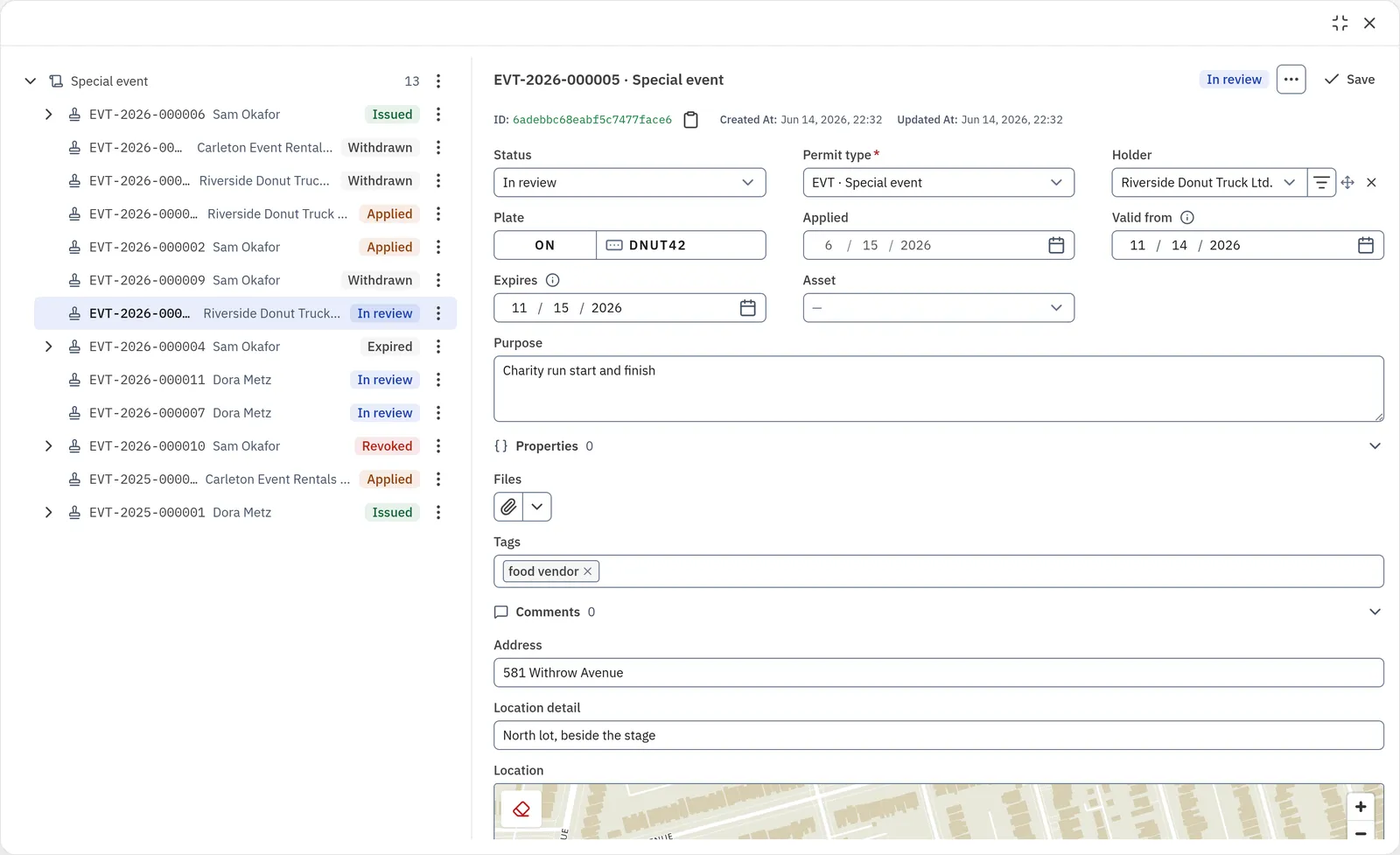
Assets, work orders, permits, and resident requests in one system. Residents report from their phone, and the report becomes the work order against the mapped asset, with nobody re-keying it in between.
Utilities & infrastructure
Full-fidelity visibility across the network, with contractor isolation enforced server-side. Condition-based maintenance from sensor readings, and outage reports straight from the map.
Construction & field delivery
Designs graduate from proposed to built as work closes, with a full audit trail behind every record. Field execution and proof in one chain.
Key capabilities
What you get beyond the map
Connect what you already run, both ways
Automations is the integration layer: a REST API, inbound and outbound webhooks, scheduled file drops, direct database connections, and device telemetry. Outbound calls queue and retry with a per-attempt log. Your existing systems stay authoritative.
AI that suggests, never acts alone
Classify and route an incoming request from a photo or a spoken description. Turn voice and an image into a completion record. Filter a list by describing what you want. Every change is proposed for a person to apply or discard.
Location-aware by default
Geography is a first-class signal: a map view exists wherever a list does, nearby stock sorts by distance, travel time between jobs is visible before it costs you, and field locations are captured automatically.
Your brand, on your own domain
White-label the name, the branding, and what appears on permits and official documents. Serve it from your own domain (yoursite.com/maps, yoursite.com/outages), so the whole experience stays inside your own web presence.

About Aptli
Thirteen years, eleven people, and one instance per customer.
Aptli has been building software since 2013. Every customer gets a dedicated instance and a dedicated database, hosted in Canadian data centres with a Canadian-owned provider, so no data leaves Canada and nothing is shared between customers.
Security and hostingSee Aptli in action.
A short walkthrough of the live map. See how it connects your teams, your systems, and the public, and get your questions answered.